
India's total purchase of oil from Russia in a month is probably less than what Europe does in an afternoon, External Affairs Minister S Jaishankar said.

CNG price in the national capital and adjoining cities on Tuesday was hiked by Rs 0.50 per kg, while an imminent increase in petrol and diesel price has been put on wait-and-watch mode for more clarity on global oil prices. CNG price in NCT of Delhi has been increased to Rs 57.51 per kg from Rs 56.51, according to the information posted on the website of Indraprastha Gas Ltd - the firm which retails CNG and piped cooking gas in the national capital. Following the firming up of international gas rates, IGL has been raising CNG rates by up to 50 paise (Rs 0.50) per kg periodically. Prices have gone up by about Rs 4 per kg this year alone.
Changes in global oil and gas rates matter more to India's economy than other major economies because the country imports around 87 per cent of its oil, half of its gas in the form of LNG, and over 60 per cent of its LPG.
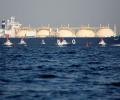
The government should bring natural gas under the Goods and Services Tax (GST) regime to realise Prime Minister Narendra Modi's vision for a gas-based economy and raising the share of the environment-friendly fuel in India's energy basket, an industry body that represents the likes of Reliance Industries as well as state-owned firms, has said. Natural gas is currently outside the ambit of GST, and existing legacy taxes -- central excise duty, state VAT, central sales tax -- continue to be applicable on the fuel. In its pre-Budget memorandum to the finance ministry, Federation of Indian Petroleum Industry (FIPI), which boasts of members from across the oil and gas spectrum, also demanded rationalisation of GST on transportation of natural gas through pipeline as well as on re-gasification of imported LNG to help bring down cost of the environment friendly fuel.
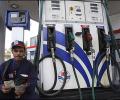
The recommendation to slash duty was made by the Bharatiya Janata Party to ease retail prices of petrol and diesel.

Prices of natural gas, which is used to generate electricity, make fertiliser and is converted into CNG to run automobiles, were on Friday hiked by a steep 40 per cent to record levels, in step with global firming up of energy rates. The rate paid for gas produced from old fields, which make up for about two-thirds of all gas produced in the country, was hiked to $8.57 per million British thermal units from the current $6.1, according to an order from the oil ministry's Petroleum Planning and Analysis Cell (PPAC). Simultaneously, the price of gas from difficult and newer fields like the ones in Reliance Industries Ltd and its partner bp plc operated deepsea D6 block in KG basin, was hiked to $12.6 per mmBtu from $9.92, the order said.

The government has told Cairn Energy that its deal with Anil Agarwal-promoted Vedanta Resources will go through only after a formal proposal to the government is made and all clearances are obtained.

The government on Friday slapped an export tax on petrol, diesel and jet fuel (ATF) while also joining nations like the UK in imposing a windfall tax on crude oil produced locally. A Rs 6 per litre tax on export of petrol and ATF and Rs 13 per litre tax on export of diesel is effective from July 1, finance ministry notifications showed. Additionally, a Rs 23,250 per tonne tax was levied on crude oil produced domestically.

With domestic retail fuel prices jumping to record high on rising international oil rates, India on Thursday pressed oil cartel OPEC for 'affordable' oil price within a 'reasonable band' and that the producers should phase out production cuts. OPEC nations such as Saudi Arabia have traditionally been India's principal oil source. But, OPEC and its allies, called OPEC+, ignoring its call for ease supply curbs had led to the world's third-biggest oil importer tap newer sources to diversify its crude oil imports. As a result, OPEC's share in India's oil imports has dropped to about 60 per cent in May from 74 per cent in the previous month.

State-owned Indian Oil Corporation (IOC), Adani-Total Gas Ltd and Shell were among the 29 companies that bid and bought natural gas to be produced from the deepest field in the KG-D6 block of Reliance Industries Ltd and bp, sources said. IOC walked away with almost half of the 6 million standard cubic meters per day of gas sold in an e-auction on Wednesday while state-owned gas utility GAIL bought 0.7 mmscmd, Adani-Total Gas Ltd 0.4 mmscmd, Shell 0.5 mmscmd, GSPC 0.25 mmscmd and IGS another 0.5 mmscmd, two sources with knowledge of the matter said. Reliance-bp on Wednesday held an e-auction for sale of gas from the MJ field in their eastern offshore KG-D6 block after incorporating the government's new marketing rules to give CNG-selling city gas companies first priority over supplies.

Equity benchmark Sensex slumped over 1,000 points to sink below the 55,000-level on Friday, tracking deep losses in IT, finance, banking and energy stocks amid widespread selling in the global markets. A weak rupee, surging crude prices and relentless foreign capital outflows further weighed on sentiment, traders said. The 30-share BSE index ended 1,016.84 points or 1.84 per cent lower at 54,303.44.

In all, 61 companies have been pre-qualified to bid for 11 shallow water and 19 deepwater blocks in an international tender, according to Myanmar's Energy Ministry.

Privatisation of BPCL, which was dubbed India's biggest ever, has been stalled with just one bidder left in the fray after two others walked out over issues such as lack of clarity in fuel pricing, a top source said. The government had planned to sell its entire 52.98 per cent stake in Bharat Petroleum Corporation Ltd (BPCL) and invited Expression of Interest from bidders in March 2020. At least three bids came in by November 2020 but only one remains now after the others withdrew from the race.
If IOC is not allowed to run its own affairs, then we can see it close down in the next 10 to 15 years, warns Sudhir Bisht.

Fifteen Cabinet ministers and 28 Ministers of State were sworn-in by President Ram Nath Kovind at a ceremony at Rashtrapati Bhavan on Wednesday evening.

India may see a structural shift in supplies of crude oil with Russia emerging as a key source of fuels, a development that reduces New Delhi's dependence on West Asian oil, gives Indian refiners better bargaining power with price-setter Saudi Arabia, and improves overall energy security. The unexpected surge in supplies of Russian crude in the last few months, unthinkable until the war in Ukraine, may also deliver other unforeseen gains such as boosting exports of refined fuels to Europe, which historically has counted on Russian shipments. India has jumped on to the bandwagon of opportunistic buying of Russian crude but if calibrated carefully, Urals crude can be a long-term asset for India refiners.

As fuel prices surged in September, the government's decision to ask companies to cut price by Rs1 each on a litre of petrol and diesel came as a dampner for private players.

Singapore-based Alert Disaster Control, one of the largest disaster management companies in the oil and gas sector, has already joined the team of experts from ONGC and OIL, reports Shine Jacob.

Questioning the idea of market-determined prices for natural gas favoured by the petroleum ministry, the Planning Commission said on Tuesday that given the shortage of the fuel, the government had a role to play.
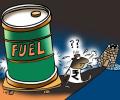
India must be prepared for a big, fat fuel import bill in FY23 - barring any further avatars of the Covid virus - as refiners crank up runs, or crude processing rates, to meet the growing demand for fuels, and crude prices soar. Capacity additions by an Indian state-run refiner will reinforce the need for foreign crude. Demand for all fuels is expected to increase by 3-8 per cent next fiscal from 2021-22, reaching pre-pandemic levels, according to analysts and industry experts.

Delhi Police on Thursday arrested 2 more persons in connection with the corporate espionage case.
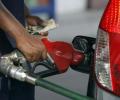
A looming global shortage of diesel in Europe presents India with more than one opportunity to profit from strong margins. A shortage of the fuel, a key contributor to inflation, has been exacerbated by the conflict in Ukraine, and western sanctions on Russian fuel supplies. The slowdown in natural gas supply means the West needs diesel to heat their homes this winter.

Russia has been grappling with sanctions slapped by the US and its allies over Moscow's invasion of Crimea.

Govt was vary of giving BJP-leader and Gujarat Chief Minister Narendra Modi any kind of advantage on the eve of elections in the state.
"In principle, the ask in return is that India should not support the G7 (Group of Seven) proposal. "A decision on this issue will be taken later following talks with all the partners," an official with the Ministry of External Affairs (MEA) said.These "substantial discounts" will be steeper than those offered by Iraq in the past two months, officials said.

Delhi police on Saturday filed chargesheet against 13 persons arrested in connection with the petroleum ministry document leak case.

India's dependence on imported crude oil to meet domestic demand has been a matter of concern for years. Delivering the inaugural address at the global energy summit - Urja Sangam - in 2015, Prime Minister Narendra Modi had called for enhancing domestic oil and gas production to cut the import burden. He aimed at lowering it by at least 10 per cent by 2022 - to coincide with the platinum jubilee of India's independence. But this target is far from being achieved and the country's import reliance has only risen.
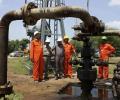
The petroleum ministry has told ONGC to give away 60%stake plus operating control in India's largest oil and gas producing fields of Mumbai High and Bassein to foreign companies, according to an October 28 letter to the state-owned company. Amar Nath, additional secretary (exploration) in the Ministry of Petroleum and Natural Gas, wrote a 3-page letter to ONGC chairman and managing director Subhash Kumar, saying productivity of the Mumbai High and Bassein & Satellite (B&S) offshore assets under state-owned firm was low and international partners should be invited and given 60 per cent participating interest (PI) and operatorship. This is the second time since April that Nath, who is part of the ONGC management as the longest-serving government nominee director on its board and often considered a potential candidate to replace Kumar next year, has written an official letter, painting a poor picture of the company's performance.

At the meeting the Sharif said that all concerned ministries should ensure 'seamless coordination' to ensure steady supply of petrol in all parts of the country.
The petroleum ministry has sought legal advice on payment of production tax by Cairn Energy of the UK on the crude oil it plans to produce from the Barmer district discovery in Rajasthan.
The appointment of this former envoy to China assumes significance in view of preparations being made to address border issues ahead of Chinese Premier Wen Jiabao's visit to India next month.

Strengthening the portfolios of the home minister and the finance minister is a message that should not be missed, points out A K Bhattacharya.

With foreign investment almost drying up in India's oil and gas sector, Petroleum Minister Dharmendra Pradhan has promised an overhaul to make policies predictable, transparent and fair to investors.

Officials from State-run refiners contend that savings from purchase of Russian oil are used to offset a part of the losses in revenues from selling transport fuels and LPG at State-set rates.
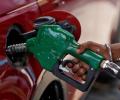
At present, India has 56,999 fuel outlets. Of those, only 6,276 are owned by private companies

They will be remanded to 11 days judicial custody.
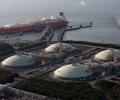
Around 15 years ago, when Reliance Industries (RIL) struck natural gas in the Krishna-Godavari (KG) basin off the east coast, the government made plans to supply that fuel cheaply to scores of generators that sprang up in India triggered by the discovery. Most of the plants, which account for 6 per cent of India's total generation capacity, operate sparsely after the KG-D6 area first failed to meet production targets, and then finally shut shop. Affordable domestic gas was why those thermal plants came up and the rate of the fuel today is why those generators hardly operate. Record liquefied natural gas (LNG) rates may yet again unravel India's ambitions to expand use of gas in industries, households and vehicles. Rates, while volatile, may stay strong this decade as developed nations with higher purchasing power embrace gas as the transition fuel.
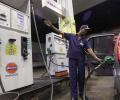
Petrol and diesel prices are likely to be hiked this week as oil companies prepare to pare losses accumulated from keeping rates steady for over four months in the run-up to assembly elections in five states, including UP, despite international oil prices jumping to a 13-year high of $140 per barrel. West Texas Intermediate crude futures, the US oil benchmark, rose to $130.50 per barrel on Sunday evening, its highest since July 2008, before retreating. The international benchmark, Brent crude, hit a high of $139.13 at one point overnight, also its highest since July 2008.
Banking and energy sector companies are the highest advance tax paying corporates in the country, owing to a surge in business and personal lending coupled with rising energy consumption, according to finance ministry sources.
